
Debt can feel like a heavy anchor, dragging down your financial stability, mental health, and life opportunities. Whether it’s credit card debt, personal loans, mortgages, or student loans, the longer it lingers, the more it grows through interest and compounding, creating a cycle that seems impossible to escape.
Breaking free from debt requires more than just wishful thinking. It takes a structured approach, discipline, and practical action. This guide introduces a 3-step formula to get out of debt, providing both the mindset and the tools needed to regain control of your finances.
Understanding Debt
1. What Debt Really Means
Debt is essentially borrowing money to cover expenses, often with interest. While borrowing is sometimes necessary—such as for homes, education, or emergencies—uncontrolled debt can quickly become overwhelming.
- Revolving Debt – Credit cards, lines of credit; interest compounds if balances are unpaid.
- Installment Debt – Personal loans, car loans, mortgages; fixed payments over time.
- High-Interest vs. Low-Interest Debt – Credit cards and payday loans are dangerous due to high interest; mortgages and some student loans are usually manageable if properly planned.
Understanding the type of debt you have is the first step to eliminating it efficiently.
2. Why Debt Becomes a Problem
Debt becomes burdensome when:
- Monthly payments exceed your budget.
- Interest rates compound faster than repayment.
- Emergencies force you to borrow more.
- Poor financial habits lead to repeated borrowing.
Unchecked debt can impact your credit score, increase stress, and limit life opportunities.
Step 1: Assess and Organize Your Debt
The first step in getting out of debt is clarity. You cannot manage what you do not understand.
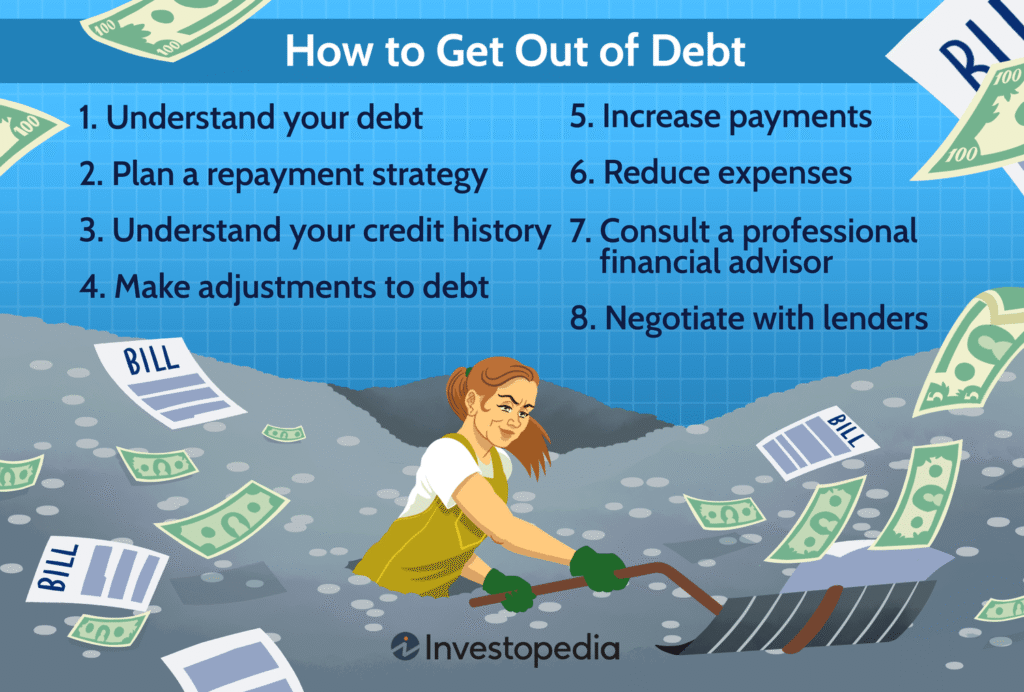
1. Make a Comprehensive Debt List
- List all debts: credit cards, loans, medical bills, lines of credit.
- Include: balances, interest rates, minimum monthly payments, due dates.
- Identify high-interest debts that cost you the most over time.
2. Categorize Debts Strategically
- High-Interest Debt – Credit cards, payday loans; prioritize these first.
- Medium-Interest Debt – Personal loans, car loans; manage carefully.
- Low-Interest Debt – Mortgages, some student loans; manageable but still require attention.
3. Calculate Total Debt and Monthly Obligations
- Add up all debts to understand the full scope.
- Compare with monthly income to identify payment gaps.
Why This Step Matters
- Provides a clear roadmap for repayment.
- Helps prioritize high-cost debt.
- Reveals opportunities to consolidate or negotiate terms.
Step 2: Create a Debt Repayment Plan
After organizing your debts, the next step is action: develop a strategic repayment plan.
1. Choose a Repayment Method
Two common strategies for effective debt elimination:
a. Avalanche Method
- Focus on paying off highest-interest debts first while making minimum payments on others.
- Advantages: Saves money on interest, faster overall repayment.
- Example: If a credit card charges 20% interest and a personal loan charges 10%, pay extra on the card first.
b. Snowball Method
- Focus on smallest debts first, regardless of interest rate.
- Advantages: Provides psychological motivation and momentum.
- Example: Pay off a $500 loan first, then apply freed-up funds to the next smallest debt.
Both methods work; choose the one that aligns with your personality and discipline level.
2. Set a Realistic Budget
- Allocate a portion of income specifically for debt repayment.
- Track all expenses to identify areas for reduction.
- Prioritize essentials, repayment, and emergency savings.
3. Consider Debt Consolidation or Negotiation
- Debt Consolidation – Combine multiple debts into one loan with lower interest.
- Negotiation – Some creditors may reduce interest rates, waive fees, or restructure payments.
- Refinancing – For mortgages or auto loans, consider lower rates to reduce monthly obligations.
4. Automate Payments
- Set up automatic payments to avoid missed deadlines.
- Reduces stress and ensures consistency.
Step 3: Adjust Lifestyle and Build Financial Discipline
The final step is long-term habit changes to prevent debt recurrence and ensure financial freedom.
1. Control Spending
- Limit discretionary purchases until debts are under control.
- Use cash or debit cards to avoid unnecessary credit use.
- Apply a “needs vs. wants” filter to all spending decisions.
2. Build an Emergency Fund
- Start with a small goal, e.g., $500–$1,000.
- Gradually expand to cover 3–6 months of living expenses.
- Protects against unforeseen expenses, avoiding new debt.
3. Increase Income
- Explore side jobs, freelancing, or investments.
- Even modest additional income accelerates debt repayment.
- Allocate all extra income toward high-interest debt.
4. Monitor Progress and Adjust
- Keep a debt journal tracking payments, balances, and milestones.
- Celebrate small wins to maintain motivation.
- Adjust repayment strategies if circumstances change (e.g., job loss, new expenses).
Practical Tips for Success
- Cut Unnecessary Expenses – Subscriptions, dining out, and luxury purchases can be reduced.
- Avoid New Debt – Pause credit card use unless essential.
- Seek Professional Advice – Financial planners or credit counselors provide personalized strategies.
- Stay Informed – Learn about interest rates, repayment strategies, and budgeting tools.
- Adopt a Debt-Free Mindset – Commit to long-term discipline and focus on financial freedom.
Psychological Benefits of Getting Out of Debt
Breaking free from debt does more than improve your finances:
- Reduces Stress and Anxiety – Less worry about bills and creditors.
- Improves Relationships – Money-related tension decreases.
- Enhances Confidence – Financial control fosters independence and empowerment.
- Frees Up Opportunities – Ability to invest, save, and make major life decisions.
Debt repayment improves both financial and emotional well-being.
Case Study: Implementing the 3-Step Formula
Consider Sarah, who had $25,000 in credit card debt and a $10,000 personal loan:
- Assessment – She listed all debts with interest rates and balances.
- Repayment Plan – Sarah used the avalanche method, paying extra on her highest-interest credit card while making minimum payments on other debts.
- Lifestyle Adjustments – She reduced discretionary spending, started a side freelance job, and built a $1,000 emergency fund.
Within three years, Sarah eliminated all high-interest debt, maintained low-interest loans responsibly, and built long-term savings, successfully escaping the debt cycle.
Long-Term Financial Habits
To remain debt-free after repayment:
- Maintain a monthly budget and track spending.
- Save for emergencies before taking on new expenses.
- Avoid lifestyle inflation; match spending to income growth wisely.
- Regularly review credit reports and financial goals.
- Invest strategically for long-term wealth building.
Conclusion
Debt can feel overwhelming, but it is manageable with a structured approach. The 3-step formula to get out of debt provides a clear roadmap:
- Assess and Organize Your Debt – Understand the full scope, categorize, and prioritize.
- Create a Debt Repayment Plan – Choose a strategy, budget wisely, consolidate if necessary, and automate payments.
- Adjust Lifestyle and Build Financial Discipline – Control spending, build an emergency fund, increase income, and maintain long-term habits.
By following this formula, anyone can regain financial control, reduce stress, and achieve lasting freedom from debt. Commitment, discipline, and consistent action are the keys to success.
Summary:
Make a list of your credit card debts and other loans. Prioritize it according to the highest interest rate debt. Pay off highest interest rate credit card debt first. Start a frugal living.
Keywords:
Debt, Credit Card Debt, Personal Finance
Article Body:
1-Make List of Your Debts
First of all know how much deep you are in credit card debt. Many credit card holders are shocked when they know the total credit card debt to be paid. They unconsciously stay away from compiling this list. But you will have to know your total debts. List down lender name, date of debt, total amount to be paid and interest rate. Arrange list according to interest rate. Highest interest rate credit card debts should be shown first.
2-Pay Credit Card with Highest Interest Rate
Now start paying highest rate credit card first. Always pay more than minimum amount. If you are addicted to minimum payment traps then you will never be out of debt for whole of your life. Banks have arranged minimum debt trap in such way that a loan could take many years to be paid off if you are just paying in minimum amounts. Always pay more than minimum. These small extra payments will save you literally thousand dollars.
3-Start Frugal Living
For as long as you are in debt, start frugal living. Cut off your credit cards. Ask companies to not offer you more credit cards. Discard impulsive buying. Try to save every penny if possible. These few dollars added to minimum payment amounts will create a snow-ball effect towards your credit card debt payments.
Tinggalkan Balasan